All-Inclusive Canon Copiers & Copier Rentals for Only $95/Month
Expert Office Equipment Service and Copier Leasing Minneapolis
Looking for copier leasing in Minneapolis, printer and copier repair near me, or managed print services Twin Cities? IOT is your local partner for office printing solutions, serving Minneapolis, St. Paul, and all of Minnesota since 1995.
IOT Has You Covered with the Best Copier Machine Servicing in Minneapolis.
IOT has been providing Minneapolis & St Paul with copiers, laser printers, repair, service, rentals, and leasing since 1995. Whether you are looking to buy a used copier, fix your laser printer, or if you are looking for copier lease for your office, we can help! Our expert technicians and experienced customer service team can solve your problems fast, with a commitment to value and integrity.
We are the best copier leasing companies providing our copier rental and copier repair services across St Paul and the entire Twin Cities metro area – with a commitment to speed, quality, and professionalism that you can expect from a company with over 25 years in business.
We provide repairs, preventative maintenance agreements, and managed print service programs (MPS) for:
Whether you’re searching for “copier rental near me”, laser printer lease or want to lease a business-class copier, IOT has dependable solutions tailored to your office needs.
Our goal is to provide you with an educated and accurate quote, and give you practical advice for any copier lease, copier repair, service, or maintenance that you may need. With our expert technicians and independent service provider as copier dealer status (we’re not affiliated with any specific manufacturers brands), you can be sure that your copier will be fixed right the first time.
Minneapolis Commercial Copier and Printer Rental Services & Solutions For 25 Years
IOT has been providing Minneapolis with copiers, laser printers, repair, service, rentals, and leasing since 1995. Whether you are looking to buy a used copier, fix your laser printer, or if you are looking to lease a copier for your office, we can help! Our expert technicians and experienced customer service team can solve your problems fast, with a commitment to value and integrity.
We provide copy machine leasing, business-class copier rentals, suitable for 2,000-25,000 pages/copies per month. You’ll get great features like collating, networking, 2-sided print/copy, faxing, and an auto document feeder (ADF).
NO Hidden Fees – Cancel At Any Time
Copier leases start at just $95 per month. A copier lease includes free delivery within the Twin Cities metro area. You will also enjoy ongoing copier maintenance, service, repair, parts, and toner cartridges too. No confusing contract, and no hidden fees – just a simple monthly payment, which you can cancel at any time.
We despise long, confusing contracts too. It’s not just you! Typical copier sales companies will make lease agreements long and complicated on purpose, to lock you into long term and auto-renewing contracts. We don’t do that. You’ll find us straightforward, and easy to work with.
Minnesota Local Since 1995
We’ve been at this since 1995. Put our expertise to work for you! We carry most major brands, so you can be sure we’ll have the right one for your needs, and we’ve got the answers, products, and services to help you out. From selection and leasing, to delivery, setup, and technical support – we’re here for you!
We’ll always provide you with an educated and accurate quote, and give you practical advice for any repair. Count on us for trained and experienced service technicians who can get the job done right, and fast, the first time. Drawing on our years of experience, we can quickly discern what is causing your problems, and work to resolve it promptly. We have been proudly serving Minneapolis MN Office Equipment.
Professional Copier Rental and Repair For The Greater Twin Cities Metro
Digital Copier Servicing At Your Office
Since 1995 we’ve been a part of the local community, proudly serving businesses from St Paul, to St Cloud, to Rochester, and everywhere in between. Our fast and friendly service technicians can come to your office and fix most major brands of digital copiers.
You can learn more about us and our technicians at our blog.
Best Copier Repairin Minneapolis.
At IOT we’ve been providing copier servicing since 1995, from Apple to Xerox – and everything in between! We’re an independent copier repair and copier sales company, allowing us to service most major copier brands such as HP, Xerox, Samsung, Canon, and more.
Whether you need emergency onsite copier repair, or upcoming maintenance and service– we are here to serve you! Count on us for trained and experienced field service technicians who can get the job done right, and fast, the first time.
We see most of the monthly payments we do ranging between $97 to $197 per month. It really varies customer by customer and what the specific needs are, but typically a business can expect to be in the $100 to $200 per month range.
Should I buy a copier or lease a copier?
We usually recommend to our customers that look at an outright purchase for any copier priced $2,500 or less. If the copiers for sale are above $2,500, then it can make more sense to explore copier lease options instead.
Can I Lease a Used Copier
Absolutely! In fact, that is our recommendation. Copiers will last for hundreds of thousands, and even million, of pages. However, many new copiers are leased by large corporations and then swapped out every few years. We acquire those off-lease copiers that are in good condition and with low page counts. In our opinion, leasing these used copiers is the best value for any small business as you get great current features at a fraction of the price compared to new.
The Minneapolis Park and Recreation Board was created by an act of the Minnesota State Legislature and a vote of Minneapolis residents in 1883. Charles M. Loring was elected the first president of the board. Loring convinced landowners to donate property around Lake Calhoun, Lake Harriet and Lake of the Isles, as well as on Minnehaha Creek.
Loring hired Horace Cleveland to create the original plan for Minneapolis parks in 1883, Cleveland’s finest landscape architecture, preserving geographical landmarks and linking them with boulevards and parkways. Loring and Cleveland were instrumental in creating Minnehaha Park, with its falls as a centerpiece.
Theodore Wirth was superintendent from 1906 to 1936 and oversaw the expansion of Minneapolis parks from 1,810 to 5,241 acres (732 to 2,121 ha). Wirth was an advocate of active recreation in all city parks and put up signs saying “Please Walk on the Grass.” Wirth also promoted neighborhood parks for the whole city, his plans called for a playground within one-quarter mile of every child and a recreation center within one-half mile of all residents. In 2017, 97% of all residents live within a 10-minute walk of a park.
The park system’s 6,084 acres (24.62 km2) make up 15% of the total area of Minneapolis, one of the highest ratios in the country.
The city’s Chain of Lakes, consisting of seven lakes and Minnehaha Creek, is connected by bike, running, and walking paths and used for swimming, fishing, picnics, boating, and ice skating. A parkway for cars, a bikeway for riders, and a walkway for pedestrians runs parallel along the 52 miles (84 km) route of the Grand Rounds National Scenic Byway. Parks are also connected through the Mississippi National River and Recreation Area regional parks and visitor centers.
The country’s oldest public wildflower garden, the Eloise Butler Wildflower Garden and Bird Sanctuary, is located within Theodore Wirth Park. Wirth Park extends into Golden Valley and is almost 90% the size of Central Park in New York City. Site of the 53-foot (16 m) Minnehaha Falls, Minnehaha Park is one of the city’s oldest and most popular parks, receiving over 850,000 visitors each year. Henry Wadsworth Longfellow named Hiawatha’s wife Minnehaha for the Minneapolis waterfall in The Song of Hiawatha, a bestselling and often-parodied 19th century poem.
The first natural swimming pool in the United States opened in Webber Park in 2015. The outdoor pool does not use any chemicals, rather it uses natural filters and plants in several container ponds to keep the water clean.
The Minneapolis Park and Recreation Board is an independently elected, semi-autonomous park district responsible for governing, maintaining, and developing the Minneapolis park system. The jurisdiction of the MPRB is contiguous with the City of Minneapolis borders, although it owns and operates four golf courses outside the city limits.
Minneapolis voters elect nine commissioners every four years: one from each of the six park districts, and three that serve at-large. The district and at-large members are elected using ranked choice voting. The Board of Commissioners appoints the Superintendent and sets policy for the MPRB.
In this article, we shall be giving quick descriptions of the various landmarks within the city of Minneapolis, Minnesota. It shall be alphabetical in order.
The C.A. Smith Lumber Historic District represents the late stage of the Minneapolis lumber industry (c. 1890-1921), the city’s short-lived but robust “post-lumber” industry (c. 1921-1939), and 19th and 20th-century manufacturing in the Camden neighborhood. The C.A. Smith Lumber Company, the Compo-Board Company, and other industrial sites in Camden were a significant economic force in encouraging the development of North Minneapolis by attracting works to the area and encouraging the subdivision of land and development of homes for workers.
The Church of the Incarnation Historic District at 3800, 3801, and 3817 Pleasant Avenue South is historically significant for its association with master architects Emmanuel Louis Masqueray, George Bertrand and Arthur Chamberlin, and Ellerbe and Company, as well as its association with master builder Horace Newell Leighton. The district’s buildings are also significant for their embodiment of the distinctive characteristics of several architectural styles; namely, Colonial Revival (the Incarnation rectory); Italian Renaissance and Romanesque Revival (the Church of the Incarnation); and Art Deco, Art Moderne, and International style (Moynihan Hall).
The earliest development in the Dinkytown area related to its position on a rail corridor between the downtowns of Minneapolis and Saint Paul. Its strategic location allowed it to develop as a commercial center linked to the area’s commerce and industry.
Dinkytown has a long-standing connection to the development of the University of Minnesota. Early property ownership records also showed that many local residences were home to professors and other University employees. Additionally, many early businesses catered to University-area needs such as lodging, restaurants, and school supplies (including printing and book-binding), in addition to typical daily needs seen in many commercial areas. This close relationship continues today, with much of the housing and commercial in this area catering to the University students, faculty, staff, and visitors.
Dinkytown also plays an important part in the history of streetcar development in Minneapolis. It was the terminus of very first horse car line route established from Downtown Minneapolis to the surrounding community. In 1875, the Minneapolis Street Railway constructed the line along Central Ave NE and 4th St SE, terminating at the intersection of 4th St SE and 15th Ave SE. The line was soon extended northward along 15th Ave SE towards Como Ave SE, along with other system expansions. This line was eventually converted to an electric streetcar. Over the years, pieces of the streetcar network were assembled (and operators consolidated), and this link became part of a larger streetcar system.
The Fifth Street Southeast Historic District exhibits popular nineteenth-century architectural styles built by influential citizens of Minneapolis. Primarily centered along Fifth Street Southeast extending from 4th Avenue to I-35W, the district generally includes those properties facing Fifth Street, in addition to a few properties facing Fourth and Sixth Street Southeast. Beginning as a scattered residential development in the late 1850s, the district expanded on the edge of the pioneer milling town of St. Anthony. When St. Anthony and Minneapolis merged in 1873, the street names were changed to numeric identities and lots along Fifth Street Southeast were sold to prominent families for further development.
The Golden Valley Road Apartments Historic District consists of seven ornate apartment buildings located along Golden Valley Road between Sheridan Avenue North and Vincent Avenue North, around the former terminus of the Broadway Avenue streetcar line. All seven buildings were designed by master architect Perry Crosier between 1927 and 1929 and exhibit elements of the Spanish Colonial Revival and Tudor Revival styles. The district is discontiguous, with the seven parcels spread out over three short blocks, and includes no non-contributing properties.
The Harmon Place Historic District was the heart of the Minneapolis automotive district for over fifty years. The buildings along Harmon Place and Hennepin Avenue include many of the city’s best remaining examples of a vital industry that engaged thousands of entrepreneurs, workers, and customers. The automotive buildings reflect the roller-coaster progress of the early automotive industry and the twentieth-century economy as both evolved on the edge of downtown Minneapolis.
The Healy Block Historic District represents one of the finest surviving collections of Queen Anne architecture in Minneapolis. Between 1886 and 1898, Theron Potter “T.P.” Healy constructed the majority of the Queen Anne-style homes in the area south of downtown Minneapolis. The district is bordered by 31st and 32nd streets on the north and south, and second and third avenues on the east and west. Healy was the only Minneapolis builder to concentrate most of his work on the Queen Anne style, which earned him the reputation as the “Master Builder” of Queen Anne in the Twin Cities.
Within the Lowry Hill East neighborhood, there is a remarkable and eclectic collection of turn of the 19th and 20th-century residences along the 2300 and 2400 blocks of Aldrich, Bryant and Colfax Avenues South. This neighborhood was developed as a typical example of the “streetcar suburb” where urban development followed the expansion of public transit service. Houses within the district feature wood balloon-frame construction and the majority retain original horizontal siding and fenestration patterns, consisting of double-hung sashes and fixed windows. House heights generally range from two to two-and-one-half stories and were constructed primarily in the Colonial Revival or Queen Anne architectural styles. The Arts & Crafts and Prairie architectural styles are also represented. The streetscapes of the Lowry Hill East Residential Historic District are created by the interplay of high-pitched rooflines, open balustrade front porches, and bay windows set alongside tree-lined boulevards.
The collection of residences in this district developed due to the collaboration of talented local architects, builder-contractors, and the new middle and upper classes. Architects of the neighborhood included Downs & Eads, Warren B. Dunnell, William Kenyon, Long, Lamoreaux & Long, Edward Stebbins, and William Channing Whitney. Theron P. Healy and Henry Ingham were among the neighborhood’s builders. As a whole, these intact resources possess physical characteristics that form a concentration of residential buildings with continuity of design and visual appearance through the use of similar setbacks, proportion, scale, material, and use of ornamentation.
The Milwaukee Avenue Historic District is a contiguous two-block development of 19th-century homes constructed for working-class families. Stretching from Franklin Avenue on the north to 24th Street on the south, Milwaukee Avenue bisects 22nd and 23rd avenues and was initially labeled 22½ Avenue. Originally platted as an alley, real estate agent William Ragan developed it as a street for speculative purposes in 1883. This intent is reflected in the lot sizes, which are small in depth and width. Building clusters of modest homes on small narrow lots was a method often employed for housing lower class residents in the industrial period. Milwaukee Avenue is the earliest “planned workers’ community” in Minneapolis.
In this article, we shall be talking about the various schools within the city of Minneapolis that are high school level and above. We will also be including other educational facilities, such as libraries, and public schools. Now, without further ado, let me describe to you the various educational facilities within the city of Minneapolis.
First off, there’s Augsburg University. It is a private liberal arts college in Minneapolis, Minnesota that is affiliated with the Evangelical Lutheran Church in America. Upon its founding in 1869, it was a Norwegian-American Lutheran seminary known as Augsburg Seminarium. Its first college class began in the fall of 1874. Today, the university enrolls approximately 3000 undergraduate students and 800 graduate students. The school is known for its emphasis on service learning; volunteering in the community is both an instructional strategy and a required part of a student’s coursework. In 2010 Augsburg was one of the six higher education institutions to receive the Presidential Award for Community Service, sponsored by the Corporation for National and Community Service. On September 1, 2017, the name of the school changed from Augsburg College to Augsburg University.
Then there’s the Minneapolis College of Art and Design (MCAD) is a private college specializing in the visual arts and located in Minneapolis, Minnesota. MCAD currently enrolls approximately 800 students. MCAD is one of just a few major art schools to offer a major in comic art.
MCAD offers several degree programs.
Bachelor of Fine Arts: The BFA program offers majors in Animation, Comic Art, Drawing and Painting, Filmmaking, Fine Arts Studio, Furniture Design, Graphic Design, Illustration, Web and Multimedia Environments, Photography, Print Paper Book, and Sculpture.
Bachelor of Science: The BSc program offers a major in entrepreneurial studies. Students have the opportunity to meet with real clients and take on real projects for a contextual study from the moment they step inside MCAD’s doors. This allows students to network with industry professionals by becoming a part of the industry themselves, giving them not only an education but also real-world experience. By the time they graduate, students already have a leg up on graduates from other colleges and universities.
Continuing Education: MCAD offers a number of continuing studies courses for children, teens, and adults. Adult courses are available for both enrichment and professional development.
Master of Fine Arts: The MFA program offers disciplines in the areas of Animation, Comic Art, Drawing, Filmmaking, Furniture Design, Graphic Design, Illustration, Interactive Media, Painting, Photography, Printmaking, Sculpture. It uses a mentor-based approach in which students select a mentor from a list of MCAD faculty and professional area artists, work one-on-one with their mentors discussing their goals as an artist, and develop strategies in studio art and liberal studies seminars to meet their needs.
Master of Arts in Sustainable Design: Launched in 2004, MCAD’s MASD program was the first accredited online program, not exclusive to architecture, focusing on sustainability methodologies that can be applied to any effort. The program was developed and is taught by long-standing sustainability practitioners working in design and business, including members of Worldchanging, Biomimicry Guild, International Society of Sustainability Professionals, and the Permaculture Guild. Students come from all industries, cultures, and career stages to share ideas and insights while learning how to apply systems thinking to their own work. Not limited to designers, business and government decision-makers find they not only learn how to work in an applied sustainability environment, but also learn design thinking methodologies—sparking real and long-term innovation.
Post-Baccalaureate Certificates: MCAD offers two professional post-baccalaureate certificate programs for students and working adults who have already completed a bachelor’s degree. The graphic design certificate program is taught partly on campus and partly online and prepares students for careers as professional graphic designers. The interactive design and marketing certificate combine web design courses with web development and marketing courses and is a 100% online program.
After that, there’s North Central University is a residential Christian liberal arts university associated with the Assemblies of God and located in Minneapolis, Minnesota. It is owned and operated by 11 Assemblies of God districts of the upper Midwest. The institution was founded in 1930 and is accredited by the Higher Learning Commission of the North Central Association of Colleges and Schools. It is one of 17 Assemblies of God institutions of Higher Education in the United States.
Then there’s the largest university, The University of Minnesota, Twin Cities (often referred to as the University of Minnesota, Minnesota, the U of M, UMN, or simply the U) is a public research university in Minneapolis and Saint Paul, Minnesota. The Minneapolis and St. Paul campuses are approximately 3 miles (4.8 km) apart, and the Saint Paul campus is actually in neighboring Falcon Heights. It is the oldest and largest campus within the University of Minnesota system and has the sixth-largest main campus student body in the United States, with 50,943 students in 2018-19. The university is the flagship institution of the University of Minnesota system and is organized into 19 colleges and schools, with sister campuses in Crookston, Duluth, Morris, and Rochester.
The University of Minnesota is one of America’s Public Ivy universities, which refers to top public universities in the United States capable of providing a collegiate experience comparable with the Ivy League. Founded in 1851, The University of Minnesota is categorized as a Doctoral University – Highest Research Activity (R1) in the Carnegie Classification of Institutions of Higher Education. Minnesota is a member of the Association of American Universities and is ranked 14th in research activity with $881 million in research and development expenditures in the fiscal year ending June 30, 2015.
The University of Minnesota faculty, alumni, and researchers have won 29 Nobel Prizes and three Pulitzer Prizes. Notable University of Minnesota alumni includes two Vice Presidents of the United States, Hubert Humphrey, and Walter Mondale, and Bob Dylan, who received the 2016 Nobel Prize in Literature.
In this article, we shall be talking about various road systems within the city of Minneapolis, Minnesota, as well as extra information on other forms of transportation within the city. Now, without further ado, let us begin.
Half of Minneapolis–Saint Paul residents work in the city where they live. Most residents drive cars, but 60% of the 160,000 people working downtown commute by means other than a single person per auto. The Metropolitan Council’s Metro Transit, which operates the light rail system and most of the city’s buses, provides free travel vouchers through the Guaranteed Ride Home program to allay fears that commuters might otherwise be occasionally stranded if, for example, they work late hours.
On January 1, 2011, the city’s limit of 343 taxis was lifted.
Minneapolis currently has two light rail lines and one commuter rail line. The METRO Blue Line LRT (formerly the Hiawatha Line) serves 34,000 riders daily and connects the Minneapolis–Saint Paul International Airport and Mall of America in Bloomington to downtown. Most of the line runs at surface level, although parts of the line run on elevated tracks (including the Franklin Avenue and Lake Street/Midtown stations) and approximately 2 miles (3.2 km) of the line runs underground, including the Lindbergh terminal subway station at the airport.
Minneapolis’s second light rail line, the METRO Green Line shares stations with the Blue Line in downtown Minneapolis, and then at the Downtown East station, travels east through the University of Minnesota, and then along University Avenue into downtown Saint Paul. Construction began in November 2010 and the line began service on June 14, 2014. The third line, the Southwest Line (Green Line extension), will connect downtown Minneapolis with the southwestern suburb of Eden Prairie. Completion is expected sometime in 2022. A northwest LRT is planned along Bottineau Boulevard (Blue Line extension) from downtown to Brooklyn Park. Metro Transit recorded 81.9 million boardings in 2017, slightly down from 82.6 million in 2016. The Blue Line carried 10.7 million riders in 2017, breaking its previous record annual ridership total. About 13.1 million people rode the Green Line in 2017, up 3.5% from 2016. However, these increases in light rail ridership were offset by a lower number of bus boardings: 55.7 million in 2017, compared to about 58.5 boardings in 2016.
The 40-mile NorthStar Commuter rail, which runs from Big Lake through the northern suburbs and terminates at the multi-modal transit station at Target Field, opened on November 16, 2009. It uses existing railroad tracks and serves 2,600 daily commuters. Annual ridership on the line increased to over 787,000 in 2017, up 12% from the previous year.
According to the 2016 American Community Survey, 59.9% of the working city of Minneapolis residents commuted by driving alone, 7.6% carpooled, 14.2% used public transportation, and 7.3% walked. About 5.1% used all other forms of transportation, including taxicab, motorcycle, and bicycle. About 5.9% of the working city of Minneapolis residents worked at home. In 2015, 18.2% of the city of Minneapolis households were without a car, which decreased to 17.1% in 2016. The national average was 8.7 percent in 2016. Minneapolis averaged 1.35 cars per household in 2016, compared to a national average of 1.8 per household.
Minneapolis ranked 27th in the nation for the highest percentage of commuters by bicycle in 2011 and was editorialized as the top bicycling city in “Bicycling’s Top 50” ranking in 2010. Ten thousand cyclists use the bike lanes in the city each day, and many people ride in the winter. The Public Works Department expanded the bicycle trail system from the Grand Rounds to 56 mi (90 km) of off-street commuter trails including the Midtown Greenway, the Light Rail Trail, Kenilworth Trail, Cedar Lake Trail and the West River Parkway Trail along the Mississippi. Minneapolis also has 40 miles (64 km) of dedicated bike lanes on city streets and encourages cycling by equipping transit buses with bike racks and by providing online bicycle maps. Many of these trails and bridges, such as the Stone Arch Bridge, were former railroad lines that have now been converted for bicycles and pedestrians. In 2007 citing the city’s bicycle lanes, buses, and LRT, Forbes identified Minneapolis the world’s fifth cleanest city. In 2010, Nice Ride Minnesota launched with 65 kiosks for bicycle sharing, and 19 pedicabs were operating downtown. In 2016, Nice Ride expanded to 171 stations and 1,833 bikes supplied by PBSC Urban Solutions, a Canadian company.
A 2011 study by Walk Score ranked Minneapolis the ninth most walkable of 50 largest cities in the United States.
The Minneapolis Skyway System, seven miles (11 km) of enclosed pedestrian bridges called skyways, link eighty city blocks downtown. Second-floor restaurants and retailers connected to these passageways are open on weekdays.
Minneapolis–Saint Paul International Airport (MSP) sits on 3,400 acres (1,400 ha) on the southeast border of the city between Minnesota State Highway 5, Interstate 494, Minnesota State Highway 77, and Minnesota State Highway 62. The airport serves international, domestic, charter and regional carriers and is a hub and home base for Sun Country Airlines and Compass Airlines. It is also the second-largest hub for Delta Air Lines, who fly more flights and passengers out of MSP than any other airline. For terminals serving 25 to 40 million passengers, MSP was named the Best Airport in North America in 2016 and 2017.
In Minneapolis, the summers are warm and wet; the winters are freezing, snowy, and windy; and it is partly cloudy year-round. Over the course of the year, the temperature typically varies from 9°F to 83°F and is rarely below -11°F or above 92°F.
Based on the tourism score, the best time of year to visit Minneapolis for warm-weather activities is from mid-June to early September.
The warm season lasts for 3.9 months, from May 22 to September 17, with an average daily high temperature above 71°F. The hottest day of the year is July 18, with an average high of 83°F and low of 65°F.
The cold season lasts for 3.3 months, from November 26 to March 4, with an average daily high temperature below 36°F. The coldest day of the year is January 22, with an average low of 9°F and high of 24°F.
In Minneapolis, the average percentage of the sky covered by clouds experiences significant seasonal variation over the course of the year.
The clearer part of the year in Minneapolis begins around June 10 and lasts for 4.2 months, ending around October 17. On July 28, the clearest day of the year, the sky is clear, mostly clear, or partly cloudy 71% of the time, and overcast or mostly cloudy 28% of the time.
The cloudier part of the year begins around October 17 and lasts for 7.8 months, ending around June 10. On February 5, the cloudiest day of the year, the sky is overcast or mostly cloudy 60% of the time, and clear, mostly clear, or partly cloudy 40% of the time.
A wet day is one with at least 0.04 inches of liquid or liquid-equivalent precipitation. The chance of wet days in Minneapolis varies significantly throughout the year.
The wetter season lasts 5.8 months, from April 10 to October 4, with a greater than 25% chance of a given day being a wet day. The chance of a wet day peaks at 41% on June 20.
The drier season lasts 6.2 months, from October 4 to April 10. The smallest chance of a wet day is 8% on February 3.
Among wet days, we distinguish between those that experience rain alone, snow alone, or a mixture of the two. Based on this categorization, the most common form of precipitation in Minneapolis changes throughout the year.
Rain alone is the most common for 8.8 months, from March 4 to November 28. The highest chance of a day with rain alone is 41% on June 20.
Snow alone is the most common for 3.2 months, from November 28 to March 4. The highest chance of a day with snow alone is 8% on December 29.
Minneapolis experiences extreme seasonal variation in monthly rainfall.
The rainy period of the year lasts for 9.1 months, from March 3 to December 5, with a sliding 31-day rainfall of at least 0.5 inches. The most rain falls during the 31 days centered around June 19, with an average total accumulation of 4.3 inches.
The rainless period of the year lasts for 2.9 months, from December 5 to March 3. The least rain falls around January 25, with an average total accumulation of 0.1 inches.
We report snowfall in liquid-equivalent terms. The actual depth of new snowfall is typically between 5 and 10 times the liquid-equivalent amount, assuming the ground is frozen. Colder, drier snow tends to be on the higher end of that range and warmer, wetter snow on the lower end.
Minneapolis experiences some seasonal variation in monthly liquid-equivalent snowfall.
The snowy period of the year lasts for 5.6 months, from October 27 to April 15, with a sliding 31-day liquid-equivalent snowfall of at least 0.1 inches. The most snow falls during the 31 days centered around December 10, with an average total liquid-equivalent accumulation of 0.5 inches.
The snowless period of the year lasts for 6.4 months, from April 15 to October 27. The least snow falls around July 22, with an average total liquid-equivalent accumulation of 0.0 inches.
During the 80’s and 90’s, the concept of laser based toner printers came into the market and the business houses and industries were going after it. At that time, a young man named Bob Brenan started his career in 1988 in a printer company as a sales representative. He was busy providing re-inked and recycled printer ribbons to different companies and business houses in the Twin cities.
With an ambitious mind and vision in his eyes Bob decided to start his own venture in the year 1995 and started International Office Technologies. At that time, different companies were racing against each other to capture the market for supplying printers. With an innovative mind, Bob felt that there was some missing link in the market and he decided to make his company slightly different from others. He thought of branding his company a complete supplier of printing solutions.
Once the business model was ready, IOT started its journey in the basement of the parental home which was located in West Saint Paul, MN. Managing time between family and business, he started offering total printer solution which included supply of printer and their repair and services. The offer was named as Total Laser Care (TLC) and it was being introduced to different companies in Minneapolis and St. Paul.
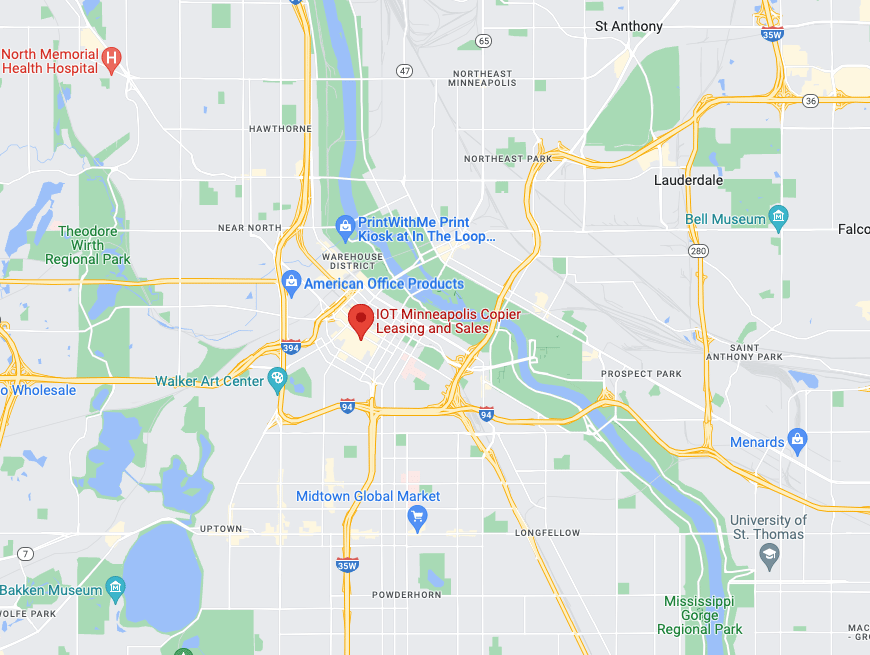
Mapquest Minneapolis Copier Repair Service http://mapq.st/2SiZjEW
During the 80’s and 90’s, the concept of laser based toner printers came into the market and the business houses and industries were going after it. At that time, a young man named Bob Brenan started his career in 1988 in a printer company as a sales representative. He was busy providing re-inked and recycled printer ribbons to different companies and business houses in the Twin cities.
With an ambitious mind and vision in his eyes Bob decided to start his own venture in the year 1995 and started International Office Technologies. At that time, different companies were racing against each other to capture the market for supplying printers. With an innovative mind, Bob felt that there was some missing link in the market and he decided to make his company slightly different from others. He thought of branding his company a complete supplier of printing solutions.
Once the business model was ready, IOT started its journey in the basement of the parental home which was located in West Saint Paul, MN. Managing time between family and business, he started offering total printer solution which included supply of printer and their repair and services. The offer was named as Total Laser Care (TLC) and it was being introduced to different companies in Minneapolis and St. Paul.
Mapquest Minneapolis Copier and Leasing Sales http://mapq.st/3eSB6hE
We are your Minnesota local in business for 25 years, dependable, honest, and affordable provider of copier leasing, rentals, sales and repairs. IOT Solutions is proud to serve the wonderful city of Minneapolis which includes the zip codes 55401, 55402, 55403, 55404, 55405, 55406, 55407, 55408, 55409, 55410, 55411, 55412, 55413, 55414, 55415, 55416, 55417, 55418, 55419, 55421, 55423, 55430, 55450, 55454, and 55455.
What are the advantages of leasing a copier machine over buying?
Advantages of leasing a copier over buying include: Lower upfront costs with a monthly payment planAbility to upgrade equipment regularlyMaintenance and repairs are typically included in the leasePotential tax benefits through operating leases
Are copier lease companies compatible with my existing equipment?
Copier lease companies typically work with a variety of brands and models, ensuring compatibility with your existing equipment. They can assess your needs and provide a solution that integrates seamlessly with your current setup.
Do copier lease companies provide maintenance services?
Yes, copier lease companies typically provide maintenance services as part of the lease agreement. This includes toner, drum replacements, and on-site repair visits to ensure the copier functions properly.
Can I terminate my copier lease agreement early?
Yes, most copier lease agreements allow for early termination, often with a fee. Check your contract for the specific terms, which may include penalties or remaining lease payments due.
Can I customize my copier machine lease agreement?
Yes, you can typically customize your copier machine lease agreement. The lease terms, monthly payments, and included services can often be tailored to your specific business needs and budget. Discuss options with your provider to find the right fit.
Can I upgrade my copier machine during the lease term?
Yes, you can typically upgrade your copier machine during the lease term. Many leasing companies offer options to upgrade to a newer model halfway through the lease period, often with minimal additional costs.
What is the average lease term for a copier machine?
The average lease term for a copier machine is typically 36 to 60 months, allowing businesses to upgrade to newer models regularly while managing costs.
What is the average cost of leasing a copier per month?
The average cost of leasing a copier per month can range from $100 to $600, depending on the copier's features, monthly volume, and contract length. Factors like maintenance, toner, and repairs are often included in the monthly lease payment.
Can I lease a copier for a short-term project?
Yes, IOT offers flexible copier rental options for short-term projects. Our rental services provide access to business-class copiers without long-term commitments, allowing you to meet your temporary equipment needs.
Can I upgrade my copier during the lease term?
Yes, you can typically upgrade your leased copier during the lease term. Many copier leasing companies offer flexible upgrade options that allow you to update to newer or more advanced models as your needs change.
What is the average cost of a copy machine lease?
The average cost of a copy machine lease typically ranges from $100 to $500 per month, depending on the machine's features, volume, and contract terms. Factors like maintenance, toner, and repair costs may also be included in the monthly lease payment.
Do copier lease companies provide on-site service and support?
Yes, copier lease companies typically provide on-site service and support for the equipment they lease. This includes maintenance, repairs, and troubleshooting by trained technicians to ensure the copier functions properly and minimizes downtime for the customer.
Do I need to purchase insurance for a leased copy machine?
Yes, it is generally recommended to purchase insurance for a leased copier. This can protect you from the cost of repairs or replacement in case of damage, theft, or other unexpected issues.
What is included in a copy machine lease agreement?
A copier lease agreement typically includes the lease term, monthly payment amount, maintenance and repair coverage, toner/ink supply refills, and the option to upgrade or return the copier at the end of the lease.
How do I choose the right copier machine to lease?
Consider your monthly print volume, required features (e.g., duplex printing, scanning), and budget when selecting a copier to lease. Choose a reputable provider that offers flexible lease terms, maintenance, and reliable service.
Can I cancel a copy machine lease early?
Yes, you can typically cancel a copy machine lease early without penalty. Many lease agreements allow you to terminate the lease early by providing 30-60 days' notice and paying the remaining balance. Check the terms of your specific lease contract for details.
Who is responsible for maintenance in a lease?
In a lease, the responsibility for maintenance is typically outlined in the lease agreement. The lessee (renter) is usually responsible for routine maintenance and upkeep, while the lessor (owner) is responsible for major repairs and maintenance.
What is the minimum lease term for a copier?
Most copier leases range from 36 to 60 months, with 60 months being the most common minimum term. Shorter terms may be available for smaller offices or lower volume machines.
Can I lease a copy machine for a small business?
Yes, you can lease a copy machine for a small business. Leasing provides flexibility to upgrade equipment, predictable monthly payments, and maintenance coverage. Many copier providers offer customized leasing options for small businesses.
What are the benefits of leasing a copier machine for my business?
Leasing a copier machine offers several benefits for businesses: Predictable monthly payments without upfront capital investmentAccess to the latest technology with regular equipment upgradesSimplified budgeting with all maintenance, repairs, and supplies includedFlexible contract terms to scale as your business needs change
Can I lease a used copier machine for my office?
Yes, you can lease a used copier machine for your office. Many companies, including International Office Technologies, offer leasing options for both new and refurbished copiers to meet your business needs and budget.
Can I lease a color copy machine?
Yes, you can lease a color copy machine. Leasing provides access to the latest equipment without a large upfront investment, allowing for flexible and predictable monthly payments.
What is the difference between leasing and buying a copier?
Leasing a copier offers lower upfront costs, fixed monthly payments, easier upgrades, and included maintenance. Buying a copier requires higher initial investment but lower long-term costs and full ownership of the equipment.
Do copier lease companies offer flexible payment plans?
Yes, many copier lease companies offer flexible payment plans, such as monthly leases that can be cancelled at any time without penalty. The plans often include maintenance, service, and supplies for a predictable monthly cost.
Are there any hidden fees in copier machine lease agreements?
Copier lease agreements typically include maintenance, supplies, and repair costs in the monthly payments. However, there may be additional fees for early termination, excess usage, or other service charges. It's important to review the full contract details carefully.
What is the minimum lease term for a copy machine?
The minimum lease term for a copy machine is typically 12 months, providing flexibility and cost-effective solutions for businesses.
Do copier machine leases come with maintenance and support?
Yes, most copier machine leases include ongoing maintenance, repairs, and technical support. Lease agreements typically cover parts, labor, and replacement toners to keep the copier operating effectively.
How do I choose the right copier lease company?
Here are key factors to consider when choosing a copier lease company:
Reputation and track record of the company
Range of copier models and brands offered
Flexibility in lease terms and payment options
Quality of maintenance, repair, and support services
Overall cost-effectiveness of the leasing solution
Can I lease a used copy machine?
Yes, you can lease a used copy machine. Many copier dealers offer leasing options for both new and refurbished/used copiers to provide flexible and affordable solutions for businesses.
What happens at the end of my copier machine lease term?
At the end of your copier lease term, you have several options: return the copier, extend the lease, or purchase the machine. Discuss the best option with your provider to determine the most suitable choice for your business needs.
What is the difference between leasing and buying a copier machine?
Leasing a copier allows for lower monthly payments, easier upgrades, and no ownership responsibility. Buying a copier requires a larger upfront cost but results in full ownership and no long-term contract.
Do copier lease companies offer discounts for non-profit organizations?
Many copier leasing companies do offer discounts or special pricing programs for non-profit organizations to help reduce their operating costs. The exact discounts can vary by provider and contract terms.
What are the copier machine lease options for startups?
Here are the main copier lease options for startups:
Short-term copier leases (12-24 months) with flexible terms
Rent-to-own copier programs that allow gradual ownership
Fair market value (FMV) leases with lower monthly payments
Equipment financing to conserve capital for other business needs
Can I lease a color copier machine for my business?
Yes, you can lease a color copier machine for your business. Leasing provides a cost-effective way to access the latest copier technology with flexible contract terms and maintenance services included.
How long are typical copier lease agreements with companies?
Typical copier lease agreements with companies range from 36 to 60 months, with options to upgrade or extend the lease term as needed. The length can vary based on factors like the equipment, monthly print volume, and business needs.
Can I lease a multifunctional copy machine?
Yes, you can lease a multifunctional copy machine. Many companies offer copier leasing services that include maintenance, repairs, and supplies for a monthly fee. This allows businesses to access the latest equipment without a large upfront investment.
What happens to the copy machine at the end of the lease?
At the end of the copier lease, the leasing company typically takes back the equipment. Customers have the option to purchase the copier at fair market value or return it to the leasing company.
Can I negotiate the terms of a copy machine lease?
Yes, you can often negotiate the terms of a copier lease. Key factors that may be negotiable include the lease length, monthly payments, fees, maintenance coverage, and early termination options.
Are there any tax benefits to leasing a copier machine?
Yes, there can be tax benefits to leasing a copier machine. Leasing expenses are often considered operating costs, which may be tax-deductible. The monthly payments can be deducted as a business expense, potentially reducing taxable income.
Do copier lease companies provide training and support?
Yes, copier lease companies typically provide training and support for their customers. This includes initial training on using the copier's features, as well as ongoing technical support and maintenance services to ensure the machine operates efficiently.
Are copy machine leases available for short-term use?
Yes, copy machine leases are available for short-term use. Many providers offer flexible rental options for businesses that need copiers for a limited time, such as temporary projects or events.
How does a copy machine lease work?
A copier lease typically includes the machine, maintenance, repairs, and toner. You pay a fixed monthly fee over the lease term, which can be 36-60 months. At the end, you can upgrade, extend, or return the copier.
Are there any hidden fees in a copy machine lease?
No, there are typically no hidden fees in a copy machine lease. The monthly payment usually covers maintenance, repairs, and supplies like toner. The contract should clearly outline all costs and fees upfront.
How much does it cost to lease a copier machine per month?
Copier leasing costs can vary widely depending on the machine's features, monthly volume, and contract terms, but typical monthly rates range from $50 to $500 or more for a business-class copier.
Do copier lease companies offer customized lease plans?
Yes, copier lease companies often offer customized lease plans to meet the specific needs and budget of each customer. They can tailor the lease terms, monthly payments, and contract length to fit the customer's requirements.
What is the process for leasing a copier machine online?
Here is the process for leasing a copier machine online:
Browse copier lease options online from reputable providers.
Select the copier model and lease terms that fit your business needs.
Provide required information like business details and intended use.
Review and agree to the lease contract terms.
Arrange for delivery and setup of the leased copier.
What are the different types of copy machine leases?
The most common types of copy machine leases are:
Operating Lease: A short-term lease where the copier is returned at the end of the lease term.
Capital Lease: A long-term lease where the copier is purchased at the end of the lease term.
Fair Market Value Lease: The lease rate is based on the fair market value of the copier at the end of the lease.
Can I lease a copier with printing and scanning capabilities?
Yes, you can lease a business-class copier that provides printing, scanning, and other advanced features. These copiers typically handle 2,000-25,000 pages per month and come with ongoing maintenance, service, and toner included in a simple monthly payment.
How long does a typical copy machine lease last?
Typical copy machine leases range from 36 to 60 months, with 60-month leases being the most common for businesses. The lease length depends on the equipment, usage, and the needs of the organization.
How do I calculate the total cost of leasing a copier machine?
To calculate the total cost of leasing a copier machine, consider the following factors: monthly lease payment, contract length, maintenance/service fees, supplies (toner, drums, etc.), and any additional costs like delivery, setup, or overages. Add up all these expenses to determine the total leasing cost.
Are there any penalties for canceling a copier machine lease?
Yes, there are typically penalties for canceling a copier lease early. The penalties can include the remaining lease payments, restocking fees, and early termination fees specified in the contract. Checking the lease agreement details is important to understand the potential costs of cancellation.
What types of copiers are available for leasing?
We lease business class copiers suitable for 2,000-25,000 pages/copies per month. Features include collating, networking, 2-sided print/copy, faxing, and auto document feeder. Ongoing maintenance, service, repair, parts, and toner are included.
Are copier lease companies available for small businesses?
Yes, copier lease companies provide flexible leasing options for small businesses to access professional-grade copiers without a large upfront investment. These companies offer all-inclusive pricing with maintenance, repairs, and toner included.
How can I extend my lease term?
Here are some tips to extend your lease term:
Communicate with your landlord well in advance about your interest in extending the lease.
Offer to sign a longer-term lease, such as 1-2 years, in exchange for a lower monthly rent.
Highlight your history as a reliable tenant to demonstrate why they should keep you.
Be willing to compromise on certain lease terms to reach an agreement.
What termination clauses are in leases?
Typical termination clauses in leases may include provisions for early termination with advance notice, termination for breach of contract, and automatic renewal or extension options. Lease terms and termination conditions can vary significantly based on the specific agreement.
Is there a lease-to-own copier option?
Yes, many copier suppliers offer lease-to-own options where you can lease a copier and eventually own it after the lease term. This allows you to spread out the cost over time.
What copier speeds suit my business?
For a small to medium-sized business, copiers with speeds between 20-50 pages per minute are typically suitable. Larger enterprises may require higher speed copiers in the 50-100 ppm range. The ideal speed depends on your monthly copy volume and needs.
How often can I upgrade models?
The frequency of model upgrades depends on your specific needs and the pace of technological advancements. Regular assessments and consultations with your provider can help determine the optimal upgrade schedule for your business requirements.
Are service contracts included in leases?
Yes, service contracts are typically included in office equipment leases. The monthly lease rate covers the equipment rental as well as ongoing maintenance, repairs, and toner/ink supplies.
Whats the copiers maximum monthly volume?
Our business class copiers are suitable for 2,000-25,000 pages/copies per month. They offer features like collating, networking, 2-sided print/copy, faxing, and an auto document feeder.
How are copier lease rates determined?
Copier lease rates are typically determined by factors such as the equipment model, monthly page volume, contract term length, and service/maintenance included. Lease rates may also vary based on the copier supplier, financing options, and the lessee's credit history.
Are lease programs available for nonprofits?
Yes, lease programs are often available for nonprofits. Many copier and printer suppliers offer leasing options tailored to the needs and budgets of nonprofit organizations.
Do leases cover copier accessories too?
Yes, most copier leases include maintenance, service, and all necessary supplies and accessories like toner, drums, and staples.
What happens if a copier malfunctions?
If a copier malfunctions, common issues may include paper jams, fuser errors, firmware problems, worn rollers, shadowing, networking difficulties, and other mechanical or electrical failures. Professional copier repair services can quickly diagnose and resolve these problems.
Is delivery included in lease agreements?
Yes, typical commercial copier lease agreements include delivery, setup, maintenance, and repairs as part of the monthly payment. The monthly fee covers the full-service experience.
How quickly can a lease start?
A lease can typically start as soon as the agreement is signed by both parties. The speed of the leasing process depends on factors like the property availability and the time required for credit checks and paperwork processing.
Are toner and supplies included in leases?
Yes, toners, drums, maintenance, and all repairs are typically included in copier leases to provide an all-inclusive pricing structure.
Is training offered with copier leases?
Yes, copier leases typically include training for employees on how to properly operate and maintain the leased equipment.
Can leases support multiple copier units?
Yes, copier leases can often support multiple units. Many providers offer package deals for bundling multiple copiers under a single lease agreement, which can provide cost savings and simplified billing.
Are there per-page costs in leases?
Yes, leases often have per-page costs for printing and copying. This can cover toner, maintenance, and other expenses. The per-page rate is typically included in the monthly lease payment.
What upgrades are available during leases?
During a copier lease, typical upgrades available include increased print/copy volume, enhanced scanning and faxing capabilities, finishing options like stapling or hole-punching, and connectivity upgrades for networking or cloud integration.
What brands do leasing companies offer?
Major brands offered by leasing companies include HP, Xerox, Canon, Ricoh, Konica Minolta, and Sharp. These companies provide a range of copiers, printers, and multifunction devices for businesses of all sizes.
Who handles copier disposal post-lease?
Most copier leasing providers handle safe and responsible disposal of copiers at the end of the lease term, including recycling components and properly disposing of e-waste. Customers should check with their leasing company for their specific policies.
Is remote copier management available?
Yes, we offer remote copier management services to monitor, maintain, and troubleshoot your copiers from our office. This provides efficient and proactive support to keep your copiers running smoothly.
Do leases cover color and B&W?
Copier leases typically cover both color and black-and-white printing, providing a consistent monthly fee for all copying and printing needs, regardless of the type of output.
What credit terms affect copier leasing?
The main credit terms that affect copier leasing include:
Lease term length (e.g., 12, 24, 36 months)
Interest rate or finance charge
Security deposit required
Buyout options at the end of the lease
Is a security deposit required for leases?
A security deposit is typically required for a lease. The security deposit amount is usually equivalent to one month's rent and is meant to cover any damages or unpaid rent at the end of the lease term.